
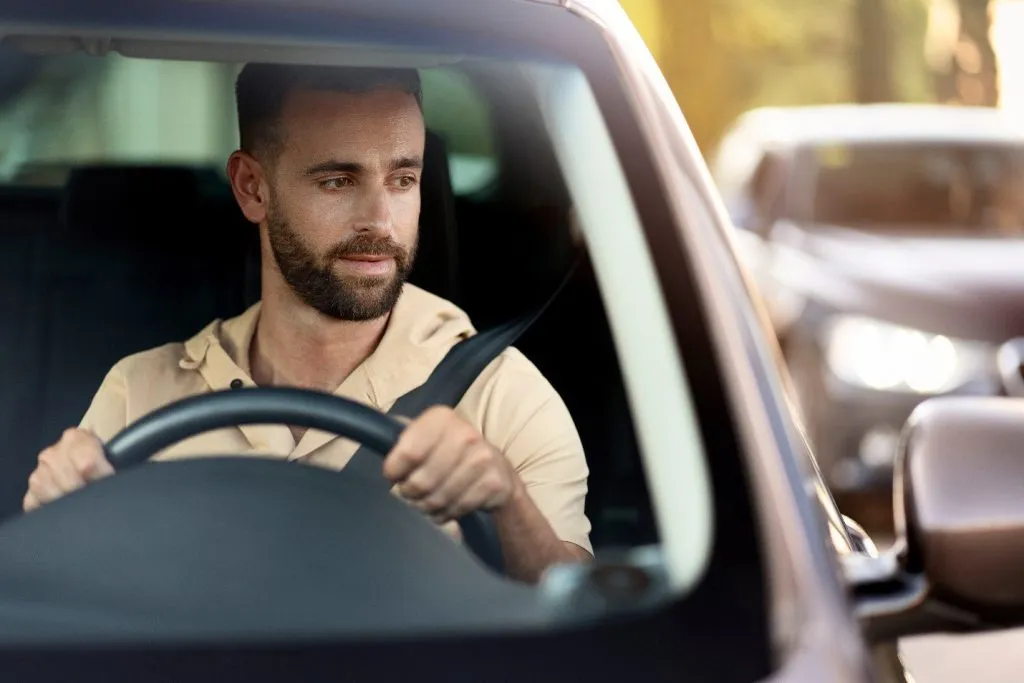

Few driving experiences induce an immediate spike of adrenaline quite like glancing into your rearview mirror and seeing a front grille inches from your bumper. The headlights glare directly into your eyes, the driver behind you appears visibly agitated, and the margin for error collapses to zero. Whether you are cruising along a highway or navigating a suburban two-lane road, the sensation of being tailgated feels intensely personal, invasive, and hostile.
Your instinct might tell you to tap your brakes, match their hostility with a sharp hand gesture, or stubbornly lock your speed to teach them a lesson. Giving in to those impulses is one of the most dangerous decisions you can make behind the wheel. When someone rides your bumper, you are no longer participating in a routine commute; you are managing a volatile, high-speed physical hazard. Successfully defusing the encounter requires stripping emotion out of the equation, leaning into deliberate defensive driving tactics, and creating physical space before a minor frustration turns into a catastrophic collision.
Understand the Physics: Why Space in Front Protects Your Rear
The most dangerous consequence of being tailgated is not the car behind you; it is your own inability to stop safely if something happens in front of you. When a driver eliminates their following distance, they rob both vehicles of critical reaction time. If a deer darts across the road or traffic ahead comes to a sudden halt, you are forced to brake hard, almost guaranteeing a violent rear-end collision.
Because you cannot physically control the gap behind your bumper, you must control the gap in front of your vehicle.
If you are normally traveling with a standard three-second following distance behind the car ahead, immediately expand that gap to five or six seconds. Ease your foot slightly off the accelerator to let the car in front pull further ahead.
Creating this generous buffer serves a critical defensive purpose: it gives you ample runway to brake smoothly and gradually if traffic slows down. By avoiding sudden, jarring stops, you provide the distracted or aggressive driver behind you enough visual notice and stopping distance to slow down their own vehicle without slamming into your trunk.
The Lethal Temptation of Brake Checking and Retaliation
When a tailgater refuses to back off, the temptation to “brake check”—stamping on the brake pedal to startle the tailgater—can feel satisfying in theory. In practice, it is reckless, counterproductive, and legally perilous.
Brake checking intentionally creates an imminent collision hazard. If the tailgater fails to react in time, you absorb the full kinetic impact of a high-speed crash, risking severe whiplash, spinal injury, and totaled vehicles. Furthermore, modern roadways are saturated with dash cameras and traffic surveillance. If you deliberately slam your brakes without a legitimate road hazard in front of you, law enforcement and insurance investigators can hold you partially or entirely liable for reckless driving, transforming you from an innocent victim into a contributing party in a personal injury lawsuit.
Beyond the physical danger of an impact, sudden aggression is the primary catalyst for severe road rage. An aggressive driver is already experiencing an emotional hijacking. Retaliating with brake checks, erratic lane shifts, or windshield washer fluid sprays does not humble an angry driver; it confirms their warped perception of conflict and invites extreme retaliation, from sideswiping to armed encounters.
Tactical Lane Management: Letting the Hazard Pass
The simplest way to eliminate a hazard is to remove yourself from its path. Your goal is not to police the highway; your sole objective is to arrive at your destination unharmed.
On Multi-Lane Highways
If you are traveling in the left lane of a multi-lane highway or interstate, your responsibility is unambiguous: yield the lane. In many jurisdictions, the far-left lane is legally reserved exclusively for passing, regardless of the posted speed limit.
Do not attempt to regulate the tailgater’s speed by pacing adjacent traffic. Check your mirrors, activate your turn signal well in advance, and move smoothly to the right lane as soon as a safe opening emerges. Resist the urge to speed up to prevent them from passing; let them blow past you. Once they are ahead, their poor driving habits are no longer your immediate physical problem.
On Single-Lane Roads
Being tailgated on a rural route or single-lane residential street is significantly more stressful because there is no passing lane available. In these situations, deliberate communication and strategic yielding are your best assets.
Maintain a steady, predictable speed. Do not suddenly drop your speed to twenty miles per hour out of spite, as this only ratchets up the follower’s frustration. Instead:
-
Look ahead for designated pullouts, wide paved shoulders, or well-lit commercial parking lots.
-
Signal your intention early so the tailgater understands your maneuver.
-
Gradually decelerate, steer fully off the travel lane into the pullout, and bring your vehicle to a stop to let the tailgater pass safely before merging back onto the roadway.
-
If no pullout exists, simply take an uncomplicated detour. Turning right onto an unfamiliar side street or looping through a gas station takes thirty seconds, yet it instantly neutralizes a dangerous dynamic.
Psychological De-Escalation Inside the Cabin
Managing a tailgater requires managing your own nervous system. When someone crawls up your bumper, your body floods with cortisol and adrenaline, narrowing your field of vision and encouraging impulsive reactions.
Take deliberate steps to minimize that visual stress:
-
Flip the night tab on your rearview mirror or activate its auto-dimming function. Blinding headlights amplify stress and cause physical eye strain. Dimming that reflection immediately lowers your sensory load.
-
Avoid direct eye contact. Staring into your rearview mirror with a scowling expression invites confrontation. Keep your eyes locked firmly on the road ahead, checking mirrors only as needed for situational awareness.
-
Keep your body language neutral. Do not throw your hands up in exasperation, shake your head, or shout toward your rear window. Aggressive drivers actively look for physical signs of irritation from their targets. Maintaining a calm, upright posture with both hands on the wheel signals non-engagement.
What to Do If Tailgating Morphs Into Targeted Stalking
Occasionally, an aggressive encounter escalates beyond garden-variety impatience. If you change lanes and the vehicle follows you, or if you make several turns and they remain glued to your bumper, you may be dealing with targeted intimidation or stalking.
If you suspect you are being actively pursued, follow this emergency safety protocol:
-
Never drive home. Pulling into your driveway reveals your personal residence and traps you in a cul-de-sac or enclosed garage with nowhere to maneuver.
-
Confirm the pursuit. Make four consecutive right turns around a series of city blocks. If the vehicle is still following you after completing a full circle, they are tracking you intentionally.
-
Keep the doors locked and windows up. Maintain a rolling vehicle at all costs; never stop on the shoulder to step out and confront the other driver.
-
Call 911 via hands-free voice commands. Clearly state your current location, direction of travel, the make, model, and license plate of the pursuing vehicle, and explain that you are being chased by an aggressive driver.
-
Head directly to a secure facility. Navigate to the nearest police station, state trooper barracks, or active fire station. If you do not know where the closest municipal building is located, steer toward a bustling, brightly lit public plaza, such as a major hospital emergency room drop-off or a busy supermarket entrance. Pull up directly to the curb, lay on your horn, and wait for assistance.
Every minute you spend behind the wheel involves sharing public space with individuals dealing with poor emotional regulation, chemical impairment, or reckless disregard for human life. Viewing these motorists not as personal adversaries to be corrected, but as mobile hazards to be avoided, shifts your entire perspective. By protecting your stopping distance, surrendering the right-of-way, and refusing to play into high-speed games of chicken, you ensure that another person’s reckless driving never dictates your survival.
Comments are closed.